The Engineer That Was
A year without writing code.
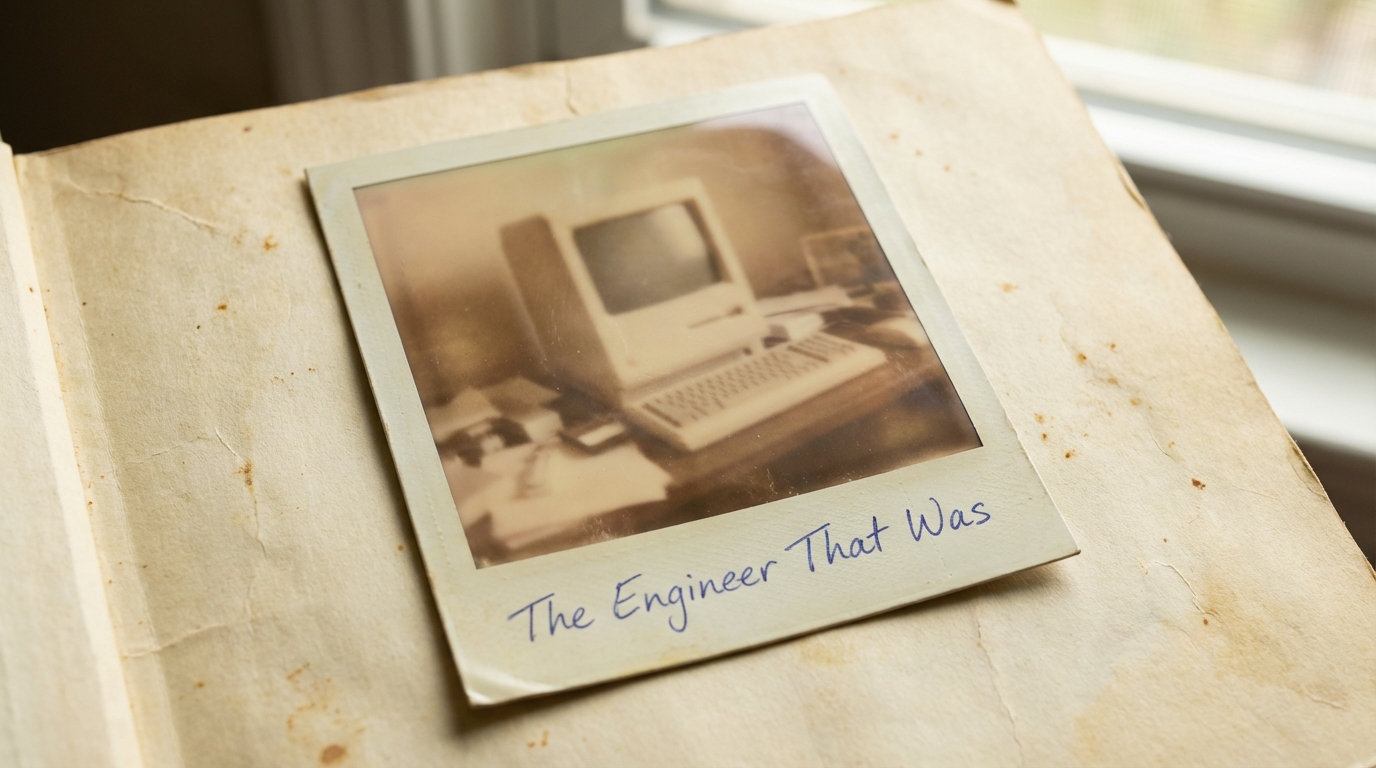
I haven't written any code in about a year. All of it is AI-generated. Every line that runs in production was written by a model, not by me.
On a typical day I've got four to six Claude Code sessions running at the same time. Between them they'll get through roughly ten million input tokens and five million output tokens a week. That's just a normal week.
A year ago it was completely different. The AI wrote code and I reviewed every line of it. I rewrote a lot of it. I was constantly keeping it in check, steering it away from bad patterns, catching bugs, restructuring things it got wrong. It was faster than doing it all myself, but there wasn't much trust there. It was supervision.
The models were good but not good enough. They'd get the broad strokes right and the details wrong. They'd solve the thing you asked about and break something next to it. You had to be watching.
It wasn't just the models getting better though. I changed too.
I've spent hundreds of hours, probably thousands, learning about AI properly. Models, temperature, top_p, seeds, context windows, system prompts. I've built dozens of apps, many of them multiple times, specifically to understand how to talk to agents. How to point them in the right direction without restricting them. How to make the most of what they know.
For me it's always been about understanding enough of the level below where you work. That's how you apply any technology well. You don't need to train models, but you need to understand how they think, what they're good at, where they fall apart.
The bit that's hardest to explain is the intuition you develop.
You get to a point where you can just feel if an agent is on track or if something's off. Without looking at the code. Just from the shape of the conversation, the kinds of questions it's asking, how it's moving through the problem. You just know.
You instinctively know what context is important. What context would add confusion. What context would stop the AI from potentially suggesting something better than what you had in mind. You learn when to give detailed instructions and when to just describe the outcome and let it figure out the path.
I've tried to write this down as reusable instructions. I don't think it's fully possible. Every prompt is different. Every situation needs its own judgement about what matters right now, for this specific task. It's a skill, not a process. And you can only develop it by doing it constantly.
I genuinely don't know where I sit in all this. I could be near the front. I could be somewhere in the middle. There's no way to tell.
Social media is full of people claiming to have the answers about AI and how to use it. I call BS on most of that. Everyone's posting their hot takes and frameworks and "how I 10x'd my productivity" threads, but it's mostly noise. It's really hard to know where anyone actually is with this stuff.
The honest position is I don't know. I just know this is where I've ended up, and it's a long way from where I started.
The software engineer that existed a year ago doesn't exist anymore.
Nobody needs to write code anymore. I genuinely believe that. The models are good enough, and they're only getting better.
But that doesn't mean you don't need to understand the code. That's the bit people miss. You still need to understand systems deeply enough to direct AI effectively. You need to read a codebase and know its shape. Spot architectural problems from a description. Know what good looks like, even if you never write it by hand again.
The thing that catches me off guard is how normal it all feels. It's almost hard to remember what it was like before. It just feels like this is how it's always been, even though it obviously hasn't. Even six months ago it was different.
The speed at which you can create and build solutions now is just incredible. And it already feels routine. That's the weird part. How quickly the radical becomes normal.
The strangest bit about all of it? Despite everything, it doesn't actually feel like my job has changed at all.
I still spend my days understanding problems, designing solutions, and making sure the right thing gets built well. The tools changed completely. The job didn't.